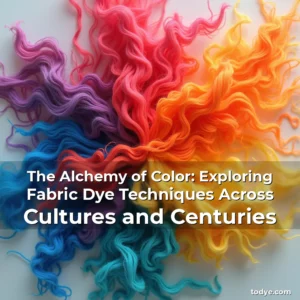
The Alchemy of Color: Unveiling the Art and Science Behind Fabric Dyeing
The Alchemy of Color: Unveiling the Art and Science Behind Fabric Dyeing
In an era where sustainability and creativity intersect, the ancient practice of fabric dyeing has experienced a renaissance. From natural plant-based dyes to synthetic pigments, the world of fabric dyeing offers endless possibilities for expression and innovation.
This exploration delves into the fascinating realm of fabric dyeing, uncovering its historical roots, modern techniques, environmental impacts, and future trends. Whether you’re a seasoned artisan or a curious beginner, there’s something here for everyone.
The Origins and Evolution of Fabric Dyeing
Fabric dyeing dates back thousands of years, with evidence found in archaeological sites across the globe. Ancient civilizations used natural substances such as indigo from plants, cochineal insects, and madder root to
Including DIY projects encourages engagement, listing required materials and steps. Address common challenges faced during the dyeing process, offering troubleshooting tips. Professional applications show the versatility of fabric dyeing in industries like fashion and performance wear. Finally, preservation tips help readers maintain their dyed fabrics longer.
The conclusion should summarize the key points and inspire further exploration. Throughout, Ensuring that each list item and subheading adds value without redundancy. Checking the word count to stay within the specified range. Avoiding markdown formatting except for the required HTML elements. Making sure the flow is logical and each section transitions smoothly into the next. Double-checking for compliance with all critical requirements to avoid missing anything.
In an era where sustainability and creativity intersect, the ancient practice of fabric dyeing has experienced a renaissance. From natural plant-based dyes to synthetic pigments, the world of fabric dyeing offers endless possibilities for expression and innovation. This exploration delves into the fascinating realm of fabric dyeing, uncovering its historical roots, modern techniques, environmental impacts, and future trends. Whether you’re a seasoned artisan or a curious beginner, there’s something here for everyone. Fabric dyeing dates back thousands of years, with evidence found in archaeological sites across the globe. Ancient civilizations used natural substances such as indigo from plants, cochineal insects, and madder root to create vibrant colors that defined their cultures. The process evolved over centuries, influenced by trade routes, technological advancements, and cultural exchanges. The Silk Road played a pivotal role in spreading textile knowledge, including dyeing methods from Asia to Europe and beyond. Dyeing involves complex chemical interactions between dyes, fibers, and fixatives. Understanding basic chemistry helps artisans achieve better results and minimize waste. Different types of fabrics require different approaches due to variations in molecular structure and absorption rates. For instance, cellulose-based fibers like cotton absorb water-soluble dyes effectively, while protein-based fibers such as wool bind well with acid dyes. Synthetic polymers like polyester need special treatments to ensure even color distribution. Dye molecules attach themselves to fabric through various mechanisms—some form covalent bonds, others rely on hydrogen bonding or physical entrapment within fiber structures. This interaction determines how permanent the color will be under different conditions. Fixatives play a crucial role in enhancing durability by preventing fading caused by light expo Common fixatives include salt, vinegar, and commercial products designed specifically for each type of dye and fabric combination. Selecting the right dye depends largely on the fabric’s composition. Natural fibers generally offer greater flexibility compared to synthetic ones which may resist certain dyes without pretreatment. Cotton, linen, hemp, and ramie are all cellulose-based materials known for absorbing natural and reactive dyes efficiently. Wool and silk, being animal proteins, respond best to acidic environments suitable for acid dyes. While traditional methods emphasize craftsmanship and ecological harmony, modern techniques leverage technology to enhance efficiency and precision. Both have merits depending on desired outcomes and available resources. Hand-dyeing allows for personalization and control over every stage of production—from selecting raw materials to applying final touches. Machine-assisted processes increase speed but can sometimes sacrifice individuality unless carefully managed. Hand-dyeing encompasses numerous styles including tie-dye, batik, shibori, and dip-dyeing. These methods encourage experimentation with patterns and textures based on manipulation before immersion in dyebath solutions. Each technique requires understanding of how tension affects pattern formation; for example, twisting fabric tightly creates sharp lines whereas loosely binding leads to softer gradients when released after soaking. Eco-conscious consumers increasingly seek out sustainable alternatives in fashion manufacturing. Sustainable dyeing not only reduces harm to ecosystems but also supports ethical sourcing practices globally. Organic cotton cultivation avoids pesticides harmful to soil health. Similarly, closed-loop systems recycle excess dye chemicals rather than releasing them into waterways. Certifications like GOTS help identify genuinely green options among market offerings. Advancements continue pushing boundaries regarding what we consider possible with fabric coloring today. Innovations range from smart textiles capable of changing appearance autonomously to biodegradable pigment formulations reducing landfill burden. Researchers explore ways to embed microcapsules containing temperature-sensitive compounds inside fabric layers so garments change color according to body heat fluctuations. Such developments promise exciting new applications yet remain experimental currently. Creating custom-colored fabrics at home provides satisfaction unmatched by store-bought items. With minimal equipment investment, anyone can experiment safely following simple guidelines outlined below. Gather essentials first: quality dye powders or liquid concentrates matched precisely against target fabric material. Also acquire measuring tools, protective gear, containers resistant to staining, and thorough cleaning supplies afterward. Despite its creative appeal, fabric dying presents several obstacles requiring patience and problem-solving skills. Issues commonly encountered relate primarily to unevenness in shade depth or unexpected reactions occurring mid-process. To address inconsistent results, maintain consistent temperatures throughout entire procedure duration and ensure complete dissolution of all ingredients before beginning actual dipping stages. From haute couture runway pieces to industrial uniforms worn daily by workers worldwide, professional-grade fabric dying plays vital roles shaping our everyday lives subtly yet significantly. High-fashion designers employ advanced digital printing technologies allowing precise placement of intricate motifs onto luxury garments made exclusively from high-quality silks or fine wools. Even beautifully dyed fabrics eventually fade given enough time exposed repeatedly either sunlight radiation or repeated washes performed improperly. Implementing proper care routines extends lifespan considerably though cannot guarantee absolute permanence indefinitely. Always follow manufacturer instructions closely concerning recommended detergent types compatible with specific dye chemistries involved originally during treatment phases conducted earlier. The journey through fabric dyeing reveals a blend of artistry, science, tradition, and innovation converging uniquely within this timeless craft. It invites us toward deeper appreciation respecting nature’s gifts alongside human ingenuity manifesting creatively across generations past present forward. Whether pursuing DIY projects personally or exploring career paths professionally, embracing fabric dyeing opens doors towards fulfilling experiences rooted firmly in history yet continuously evolving ahead always welcoming fresh ideas emerging constantly around corners waiting patiently discovered next day perhaps soonest surprise awaits!The Alchemy of Color: Unveiling the Art and Science Behind Fabric Dyeing
The Origins and Evolution of Fabric Dyeing
The Chemistry Behind Fabric Dyeing
Molecular Interactions and Fixative Roles
Types of Fabrics and Their Compatibility with Dyes
Traditional vs Modern Methods of Fabric Dyeing
Exploring Hand-Dyeing Techniques
Sustainable Practices in Contemporary Fabric Dyeing
Trends Shaping Future Directions in Fabric Dye Technology
DIY Fabric Dye Projects for Home Enthusiasts
Common Challenges Faced During Fabric Dying Processes
Professional Applications Across Various Industries
Preservation Tips for Maintaining Vibrant Colors Over Time
Conclusion

news is a contributor at ToDye. We are committed to providing well-researched, accurate, and valuable content to our readers.